How to Check Blade Balance on an Electric Lawn Mower and Know When to Replace It

The electric lawn mower is essential for maintaining a healthy, even lawn. While many users focus on battery life or keeping the mower clean, they often overlook blade balance. Unbalanced blades can cause uneven cutting, excessive vibration, motor damage, and even safety hazards. More importantly, unbalanced blades often accompany wear or deformation, reducing cutting efficiency. This guide teaches you how to check blade balance at home and identify when to replace blades, extending your electric lawn mower’s lifespan.
1. Why Blade Imbalance Harms Your Electric Lawn Mower
Blade imbalance affects all types of electric lawn mowers, including cordless electric lawn mowers, self-propelled electric lawn mowers, and standard electric push lawn mowers. The main risks include:
Increased Vibration: Imbalanced blades make the mower shake violently, loosening screws and wearing motor bearings. A mower designed to last five years could require motor repair in just three if unbalanced blades are used long-term.
Uneven Cutting: Unequal force during rotation leads to one side cutting shorter than the other, leaving patches of uncut grass and forcing repeated passes.
Higher Safety Risk: Off-center rotation at high speed can cause the mower to drift, especially on slopes, potentially colliding with obstacles or injuring the operator.
Many users assume that blades are fine as long as they aren’t broken. In reality, unbalanced blades can be more damaging than dull blades. Regular balance checks are essential for proper maintenance.
2. Three DIY Blade Balance Checks
You don’t need professional tools to assess your electric lawn mower blade balance. Common household items suffice:
Method 1: Center Suspension Test
Tools Needed: Thin wire or a straightened coat hanger, a sturdy table or support
Applicable To: All electric lawn mower blades
Steps:
Remove the Blade: Disconnect power (remove battery for cordless, unplug corded). Unscrew blade mounting bolts, marking blade orientation.
Suspend Blade: Fix the wire horizontally on a table edge. Place the blade’s center hole over the wire, allowing it to hang freely.
Observe: If both ends remain level, the blade is balanced. If one end drops, the blade is unbalanced and needs adjustment or replacement.
Tip: Clean the blade before testing to remove grass or soil residue, which can affect results.
Method 2: Flat Surface Rotation Test
Tools Needed: Flat, stable table or glass surface
Applicable To: Slightly unbalanced blades without visible deformation
Steps:
Clean the blade thoroughly.
Place the blade flat on the table, aligning the center hole with a marked reference point.
Gently rotate the blade up to 90 degrees and release. If the blade consistently returns to the same position with one end down, it is slightly unbalanced and may require light grinding.
Tip: Ensure the table is level using a spirit level to avoid false readings.
Method 3: Vibration Comparison Test
Tools Needed: None; observe the mower in operation
Applicable To: Quick assessment without disassembly
Steps:
Idle Test: Start the mower without engaging the grass. Lightly hold the handle. Minor, even vibrations are normal. Strong, uneven vibrations or buzzing indicate blade imbalance.
Load Test: Mow a 10–20 meter patch at low speed. Straight cutting lines and even lawn height indicate balanced blades. Deviations in mower path or uneven grass height require inspection using Methods 1 or 2.
Tip: For self-propelled models, disable the drive function to avoid motor power masking blade vibration.
3. Signs Your Electric Lawn Mower Blade Needs Replacement
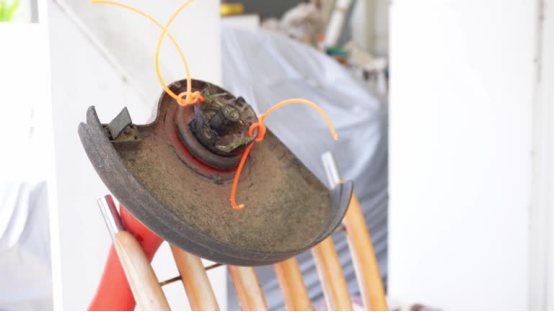
Blade balance isn’t the only factor for replacement. Replace blades if you notice:
Visible Deformation or Nicks: Bent edges or chipped teeth can damage grass even if balanced.
Severely Dull Edges: Blunt edges fail to cut efficiently, crushing grass instead.
Rust or Cracks: Rust changes weight distribution, causing imbalance. Small cracks can lead to blade breakage during high-speed rotation.
Typically, blades last 50–80 hours of mowing per season. Even if no damage is visible, annual replacement is recommended to avoid hidden risks.
4. Blade Replacement Guidelines
Incorrect blade installation can harm your mower. Keep these tips in mind:
Match Mower Model: Blade size and hole diameter vary by mower. Check your manual or provide the model to the supplier. Sites like buyelectriclawnmower.com allow model-specific matching.
Select Blade Type: Choose standard straight blades for regular lawns or high-hardness serrated blades for dense or weedy lawns.
Install Correctly: Follow orientation markings and tighten bolts to recommended torque (usually 25–30 N·m). Overtightening can strip threads; undertightening can cause wobble.
5. Conclusion: Regular Checks and Timely Replacement Extend Mower Life
Blades are the core component of an electric lawn mower. Regular balance checks and timely replacement ensure efficient, safe mowing and reduce wear on the machine. Inspect blades every 10–15 mowing sessions or monthly. Minor imbalances can sometimes be corrected by light grinding, but any deformation, dullness, or rust warrants replacement. Using the right blades for your cordless or self-propelled electric lawn mower maintains optimal performance and prolongs equipment life.