Safe Potted Plant Trimming Guide: 3 Cordless Tools for Perfect Edges

Many gardeners worry about scratching ceramic pots or leaving uneven grass when trimming around potted plants. The truth is: with the right cordless tools and some smart techniques, you can get a clean 1 cm edge cut—without damaging your pots. Based on real tests with three tools from buyelectriclawnmower.com, here’s how to trim safely around everything from round ceramic pots to rectangular planters.
1. 22V Cordless 4-in-1 Grass Trimmer: Wheels + Soft Guard for Round Pots
Why It Works
This tool includes a detachable wheel and soft rubber strip. The wheel keeps the blade at a safe 1 cm distance from the pot, while the rubber guard absorbs small bumps—perfect for ceramic and clay pots wider than 6 inches in diameter.
Step-by-Step Technique
Attach the Wheel + Adjust Distance: Snap on the wheel so it rolls right along the pot’s edge. The blade naturally stays 1 cm away. For fragile ceramics, add a thin foam pad on the wheel’s inside for extra cushion.
Set Height + Pick Blade Type: For soft grass, use the nylon line head. For thicker stems, switch to the metal blade—but keep it within the wheel’s range. Adjust cutting height to 1–2 inches below the pot base.
Circle Trim: “Slow Walk + Light Grip”: Hold the telescopic shaft adjusted to your height. Keep the wheel touching the pot and walk slowly (about one step per second). If the pot has decorative ridges, gently lift the tool tip to glide over bumps.
Pro Tip
If you have trailing plants (like ivy), tuck them inside the pot before trimming to avoid tangling. After trimming, brush off grass debris from the wheel for smoother use next time.
2. 22V Cordless 3-in-1 Rotary Mower: Small Blade + Angle Adjust for Square Pots and Tight Spaces
Why It Works
Its 4-inch cutting head slips into gaps as narrow as 0.8 inches. The adjustable angle makes it ideal for square planters, balcony pots, or pots placed flush against walls.
Step-by-Step Technique
Pick the Right Blade + Adjust Angle: Use a plastic blade for soft grass and a carbon-steel blade for tougher growth (avoid direct metal contact with pots). For wall-hugging pots, set the head at a 45° downward angle.
Start from the Pot’s Front Edge: Align the blade 1 cm outside the pot’s rim, then power on. Move slowly forward.
Corners + Narrow Gaps: “Tap + Adjust”: In planter corners, cut one side fully, then gently rotate the tool to the next edge. Use short trigger taps instead of continuous runs to prevent slips. For 0.8–1 inch wall gaps, rotate the head to 90°, insert vertically, and sweep lightly.
Pro Tip
Always keep the tool parallel to the pot. For scratch-prone plastic pots, tape a strip of painter’s tape around the rim as a removable protective layer.
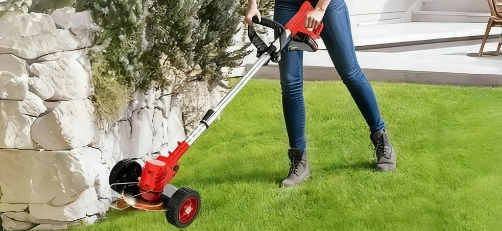
3. 1600W Corded Weed Trimmer: Wide Blade + Soft Guard for Rows of Pots
Why It Works
With a 13-inch cutting width and a rubber guard strip, this trimmer makes quick work of multiple pots lined up in a row. Perfect for patio displays or small garden beds.
Step-by-Step Technique
Attach Rubber Guard + Set Height: Stick the included guard on the blade’s pot-facing side. Adjust the cutting height to 1.5 inches for uniform results.
Follow the “Midline Guide”: Choose a reference point (like the center of the first pot). Keep the blade’s rubber edge aligned with this midline, pushing steadily forward.
Offset Pots: “One Side at a Time”: If two pots are closer than usual, trim one side completely before shifting to the other. Finish by blowing off grass debris with a handheld blower.
Pro Tip
Move slowly—half a step per second. The motor is powerful, so steady pacing prevents accidents or bumps.
4. Universal Safety Rules: 3 Must-Follow Tips
Test Distance First: Place the tool near the pot (power off) and confirm at least a 1 cm gap before starting.
Leave Short Grass, Not Scratches: If grass grows too close (<1 cm), leave a 0.2-inch stub and finish with hand scissors. Better a little grass than a damaged pot.
Inspect After Cutting: Wipe rims with a cloth to remove debris. For faint scratches on ceramic, polish gently with toothpaste to restore shine.
Real-Life Example
I recently trimmed the edges of 10 small succulent pots using the 22V Cordless 3-in-1 Mower. By switching to a plastic blade, angling the head at 45°, and using the “tap + adjust” method, I cut all edges neatly. Not a single pot was scratched—and it was faster than hand scissors.
Final Thoughts
The secret to safe pot-edge trimming is simple: match the right tool to the pot type, and follow controlled, step-by-step movements. Whether it’s round ceramic pots, square plastic planters, or long rows of flowerbeds, these cordless solutions deliver clean edges without damage.
What type of pots do you use most—round ceramics, square planters, or balcony boxes? Share in the comments, and I’ll suggest the best trimming method for your setup.