The Electric Lawn Mower: Your Secret Weapon for a Smaller Carbon Footprint

In the quest for a greener home, we often overlook the tools right outside our back door. While we focus on efficient appliances and LED bulbs, the traditional gas-powered lawn mower quietly churns out disproportionate emissions. Switching to an electric lawn mower isn’t just a convenience upgrade—it’s a measurable climate action. This guide breaks down the exact carbon math, reveals hidden environmental benefits, and shows you how to choose a model that turns weekend chores into a net positive for the planet. For those ready to explore options, a great starting point is our curated collection of high-performance electric lawn mowers.
Table of Contents
The Carbon Math: Gas vs. Electric Lawn Mower Emissions
Let’s start with the hard numbers that reveal why your old mower is an environmental outlier. A typical 160cc gas mower emits roughly 2.5 kilograms of carbon dioxide per hour of operation. It also releases a cocktail of carbon monoxide and nitrogen oxides directly into your immediate environment—pollutants that degrade local air quality and affect respiratory health.
Compare this to an electric lawn mower. During use, it produces zero tailpipe emissions. Its carbon footprint is tied to electricity generation. Using the global average grid emission factor of about 0.5 kg of CO₂ per kilowatt-hour, a 2000-watt electric lawn mower uses approximately 1 kWh for a 30-minute session, resulting in just 0.5 kg of CO₂. That’s a 60% reduction per use before we even consider cleaner energy sources.
Your Yearly Impact: A Data-Driven Scenario
For a clear picture, let’s calculate the annual impact for an average suburban yard of about 1,000 square feet, mowed 15 times a year for 30 minutes each session.
Gas Mower Annual Emissions:
- Per session: 2.5 kg/hour × 0.5 hours = 1.25 kg CO₂
- Per year: 1.25 kg × 15 sessions = 18.75 kg CO₂
- Plus approximately 4.5 kg of additional harmful gases.
Electric Lawn Mower Annual Emissions:
- Per session: 1 kWh × 0.5 kg CO₂/kWh = 0.5 kg CO₂
- Per year: 0.5 kg × 15 sessions = 7.5 kg CO₂
- Zero localized harmful gas emissions.
The Bottom Line: You save 11.25 kg of CO₂ annually. To put that in perspective, that’s equivalent to:
- The annual carbon sequestration of one mature tree.
- Avoiding a 36-mile car drive.
- Saving about 10 liters of gasoline from being burned.
For larger yards or more frequent mowing, the savings scale up. A 2,000 sq ft lawn mowed 20 times a year could see over 25 kg of CO₂ reduction by switching to an electric lawn mower.
Beyond CO₂: The Ripple Effects of Quieter, Cleaner Mowing
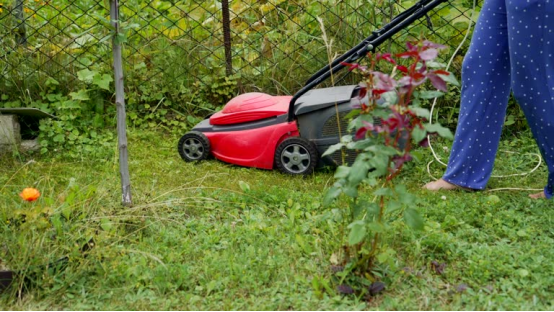
The environmental case for an electric lawn mower extends far beyond the carbon spreadsheet.
1. Radical Energy Efficiency: Electric motors convert 85-90% of energy into useful work. Gas engines waste 70-75% as heat and friction. This means an electric lawn mower does more with less energy input from the source.
2. Drastic Reduction in “Maintenance Emissions”: Think of the oil, filters, and spark plugs a gas mower consumes. Their production, packaging, and transportation create a hidden secondary carbon trail. An electric lawn mower eliminates nearly all of this, requiring only occasional blade sharpening.
3. Noise as Pollution: Gas mowers operate at 85-95 decibels—a significant noise pollutant that disrupts wildlife and human peace. An electric lawn mower typically runs at 60-75 dB, making your mowing session less intrusive for birds, pollinators, and neighbors. It allows for more flexible mowing times and creates a calmer backyard environment.
How to Choose an Electric Lawn Mower That Maximizes Your Green Impact
Selecting the right model ensures you get the greatest environmental return on your investment.
Match Power to Your Plot: An oversized mower wastes energy. For lawns under 1,000 sq ft, a 1500–2000W electric lawn mower is sufficient. For 1,000–2,000 sq ft, look for 2000–3000W models to handle the job efficiently in a single charge.
Embrace Lithium-Ion Technology: For cordless models, lithium-ion batteries are the green standard. They offer longer lifespans (5-8 years), higher energy density, and far better recycling prospects than outdated lead-acid batteries. For the ultimate green setup, pair a lithium-ion electric lawn mower with a home solar panel system for truly net-zero mowing. You can find excellent examples of these efficient, modern models in our curated collection of lithium-powered cordless mowers.
Prioritize Durability & Design: A mower that lasts longer has a lower lifetime carbon footprint. Look for features like brushless motors (more efficient and longer-lasting), reinforced polymer decks (rust-proof and durable), and robust construction. A well-made electric lawn mower is a purchase for the next decade, not just the next season.
Consider Your Energy Source: To maximize your environmental benefit, consider how you’ll charge your mower. If you have solar panels or access to a green energy plan, your electric lawn mower’s effective emissions drop dramatically toward zero. Explore our guide to solar-compatible electric mowing systems to see models designed to integrate seamlessly with renewable home energy.
The Real-World Experience: What Switching Feels Like
Homeowners who make the switch report a transformation in the chore itself. The instant start of an electric lawn mower—no more pulling cords—is the first noticeable change. The significant reduction in vibration makes pushing easier and less fatiguing. The absence of gasoline fumes means you can mow with windows open and kids playing nearby without concern.
Many are surprised by how the quieter operation changes their routine, allowing for early morning or evening mowing without disturbing the peace. Over several seasons, the savings on fuel and maintenance often offset a meaningful portion of the initial cost, making the electric lawn mower an economically sound choice as well.
Conclusion: A Simple Switch with Compound Interest for the Planet
An electric lawn mower represents one of the most straightforward and effective green upgrades a homeowner can make. The data is clear: you can cut the carbon emissions from your lawn care by 60% or more. The benefits compound with cleaner grid energy, proper model selection, and the elimination of maintenance waste.
This isn’t about perfection; it’s about material progress. Each electric lawn mower in a neighborhood contributes to cleaner air, quieter streets, and a collective reduction in carbon output. It proves that impactful climate action can start with the tools we use every weekend.
Ready to calculate your potential savings and find the right model for your yard? Begin your search with our comprehensive buyer’s guide to energy-efficient electric mowers, where we compare specs, runtime, and real-world performance to help you make an informed choice for your home and the planet.