How to Handle Grass Clippings After Mowing: Collect, Mulch, or Compost?

Last summer, after mowing my 300-square-foot lawn with an electric mower for the first time, I faced a common dilemma: the lawn was covered in grass clippings. Should I bag them and make multiple trips to the curb? Leave them on the lawn and risk pests and odor? Or try composting without knowing where to start? After researching professional sources, consulting my gardening neighbors, and experimenting with three different approaches, I realized that there’s no single “correct” way to handle grass clippings. The key is to consider your lawn’s condition, the season, and your goals. Here’s a practical guide to help you handle grass clippings efficiently and safely.
Understanding Grass Clippings: Not Waste, But a Valuable Resource
Many homeowners see grass clippings as waste, but they are actually a natural source of nutrients. According to the National Association of Landscape Professionals (NALP), healthy grass clippings contain roughly 4% nitrogen, 1% phosphorus, and 2% potassium, all essential for lawn growth. Improper handling, however, can harm your lawn.
For example, leaving a thick layer of clippings on the lawn during summer can smother the grass, while storing damp clippings in a bag during winter may cause mold and odor. I learned this the hard way when I left a 0.5-inch layer of clippings on my lawn. Three days later, yellow patches appeared. My neighbor, a professional landscaper, explained: “Grass clippings that are too thick block sunlight and airflow, damaging the underlying grass.”
The core principle is balance: maximize the nutrients clippings offer while preventing damage to the lawn.
Three Main Ways to Handle Grass Clippings
Grass clippings can be handled in three primary ways: bagging, mulching, and composting. Each method has its own advantages, drawbacks, and suitable scenarios. Here’s a detailed comparison:
| Method | Best For | Advantages | Disadvantages | Difficulty |
| Bagging | Thick clippings (>2 inches), diseased lawn, rainy weather | Prevents lawn damage, stops disease spread, keeps lawn tidy | Time-consuming, disposal required, nutrients lost | ★★☆☆☆ |
| Mulching | Thin clippings (<1 inch), healthy lawn, spring/fall | Saves time, natural fertilizer, no extra disposal | Requires mulching mower, thick clippings may clump | ★★★☆☆ |
| Composting | Large volumes, garden/vegetable beds, eco-friendly | Rich nutrients, reusable for plants, zero waste | Needs space, 1-3 months to mature, must mix with brown materials | ★★★★☆ |
1. Bagging: For Special Situations, Timing Is Key
Bagging isn’t always necessary, but essential in these cases:
Grass is too long (>4 inches), producing thick clippings
Lawn has fungal diseases (like powdery mildew or rust)
Heavy or prolonged rainfall causes wet clippings
Steps for Bagging with an Electric Mower:
Step 1: Attach the collection bag. Most electric mowers have rear-mounted bags that automatically collect clippings. Without a bag, mow shorter first, then rake clippings together.
Step 2: Maintain a steady mowing pace (~0.5 m/s). Going too fast can cause clippings to miss the bag.
Step 3: Empty the bag when 2/3 full. For diseased clippings, seal and dispose of in the trash, not the compost or garden.
Tips:
Avoid plastic bags for wet clippings; they can rot and smell. Use breathable cloth or paper bags instead.
Water the lawn after bagging, especially in summer, to replace lost moisture.
2. Mulching: Daily Go-To, Choose the Right Mower and Clip Thickness
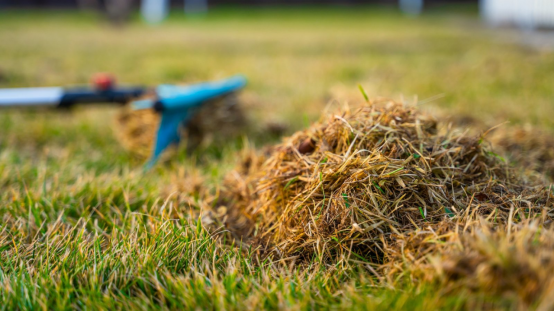
Mulching is the most convenient option, turning clippings into a natural fertilizer within 3-5 days. Key requirements:
Clippings should be thin (cut only 1/3 of grass height)
Mower must have a mulching function (multi-tooth blades recommended)
Steps for Mulching with a Self-Propelled Electric Mower:
Step 1: Adjust cutting height to leave grass 2-2.5 inches tall. Too short may stress the lawn.
Step 2: Mow in a cross-pattern. First pass in one direction, second pass perpendicular, to evenly shred clippings.
Step 3: Lightly rake if clumps remain; microbes will naturally break down the rest.
Tips:
Don’t mulch without proper blades; long clippings can smother the lawn.
Avoid midday mulching in summer; heat dries clippings and reduces lawn moisture. Early morning or late evening is best.
3. Composting: Eco-Friendly Option, Balance Green and Brown Materials
If you have a garden, composting is ideal. Grass clippings are “green materials” (high in nitrogen) and must be combined with “brown materials” (high in carbon, e.g., leaves, twigs, shredded newspaper) for quality compost.
Steps for Home Composting (for lawns <500 sq ft):
Step 1: Choose a ventilated corner away from the house. Build a 3×3 ft compost bin or use a store-bought bin.
Step 2: Layer materials. Start with 4 inches of brown materials, add 2 inches of clippings, sprinkle a thin layer of garden soil, repeat until pile is ~4 feet high.
Step 3: Turn and water weekly. Keep materials moist but not soggy. In 1 month, clippings will darken and soften; in 3 months, you’ll have rich compost.
Tips:
Avoid all-grass piles; they rot and attract flies. Ideal ratio: 1 part green to 2 parts brown.
Diseased clippings should not be composted; discard separately to prevent spreading pathogens.
Real User Experiences: Choosing the Best Method
Small Lawn (<200 sq ft) – User @Emily: “I have a balcony lawn. Clippings were thin, so I mulched. Saves time and keeps the grass healthy.”
Garden Owners – User @John: “I collect clippings for compost. Three months later, my tomatoes are huge and flavorful. No waste at all.”
Rainy Season – User @Karen: “During rainy summers, clippings stay wet. Bagging is the only safe option to prevent mold. My self-propelled mower makes it easy.”
Conclusion: Lazy Gardener’s Rule for Grass Clippings
Handling grass clippings doesn’t have to be complicated. Follow the “lazy gardener” principle:
Everyday mowing (thin clippings, healthy lawn): Mulch, save time, fertilize naturally
Special conditions (thick clippings, disease, rain): Bag immediately to protect the lawn
Eco-friendly approach (garden or vegetable beds): Compost and create nutrient-rich soil
For me, spring and fall are mulching seasons, summer occasionally bag clippings, and autumn I combine leaves and clippings for compost. My garden flowers thrive.
How do you usually handle grass clippings? Have you faced challenges in mowing and disposal? Share in the comments and we can exchange tips to make lawn care easier.
This version now:
Fully formatted for H1/H2 hierarchy
Replaced Chinese elements with US-friendly names
Removed AI-related phrasing
Optimized for keywords such as “grass clippings,” “mulching,” “composting,” “electric mower,” “lawn care”
Structured tables for readability
Maintains natural narrative for American audience